
How Photochemical Etching Produces High-Precision Stainless Steel Parts
High-precision stainless steel parts are used in many critical applications where accuracy, flatness, edge quality, and material reliability matter. From stainless steel filters and shims to encoder discs, lead frames, speaker meshes, and medical components, these parts often require complex geometries that are difficult to achieve with conventional cutting or stamping methods.
Photochemical etching offers an efficient solution for producing thin stainless steel parts with fine details and burr-free edges. Instead of mechanically cutting the metal, the process uses controlled chemical reactions to remove selected areas of material. This allows manufacturers to create precise patterns while maintaining the original properties and flatness of the stainless steel sheet.
What Is Photochemical Etching?
Photochemical etching is a subtractive manufacturing process used to produce precision metal components from thin sheet metal. The process combines photographic pattern transfer with chemical material removal. A stainless steel sheet is coated with a photosensitive resist, exposed to a precise artwork pattern, developed, and then etched in a chemical solution to remove the unprotected metal.
The key advantage of this process is that it does not require mechanical force. There is no punching, shearing, laser heat-affected zone, or tool pressure. As a result, photochemical etching can produce delicate stainless steel parts with clean edges, accurate features, and minimal material stress.
For stainless steel components with fine holes, narrow channels, micro slots, or intricate shapes, photochemical etching provides a high level of design freedom.
Why Stainless Steel Is Ideal for Precision Etching
Stainless steel is one of the most commonly etched materials because it offers excellent strength, corrosion resistance, and dimensional stability. Different stainless steel grades can be selected according to the final application, including common materials such as 304, 301, 316, 430, and other stainless steel alloys.
For example, stainless steel 304 is widely used for general precision components because of its balanced corrosion resistance and formability. Stainless steel 316 offers better corrosion resistance in demanding environments. Stainless steel 301 is often used where spring performance or elastic properties are required.
Photochemical etching can process these materials into thin, detailed components without changing their basic mechanical characteristics. This is important for parts that need to maintain spring performance, flatness, conductivity, filtration accuracy, or assembly reliability.
Step 1: Material Selection and Surface Preparation
The process begins with selecting the correct stainless steel grade and thickness. Material thickness has a direct impact on achievable feature size, tolerance, edge profile, and final part performance. Engineers usually need to define the required material grade, hardness, surface condition, thickness, and functional requirements before production begins.
After material selection, the stainless steel sheet is carefully cleaned. Surface contamination such as oil, dust, oxide layers, or fingerprints can affect photoresist adhesion and etching quality. A clean surface ensures that the resist bonds evenly and that the final pattern is accurate.
Good surface preparation is one of the foundations of high-precision stainless steel etching.
Step 2: Photoresist Coating
After cleaning, a photosensitive resist is applied to the stainless steel sheet. The photoresist acts as a protective layer during the etching process. Areas covered by the resist remain protected, while exposed metal areas will later be removed by the etchant.
The quality and uniformity of the photoresist coating are critical. Uneven coating can lead to inconsistent line width, poor edge definition, or dimensional variation. For high-precision parts, stable coating control helps ensure repeatability from prototype to batch production.
Step 3: Artwork Exposure
The desired part geometry is transferred onto the photoresist using a precise artwork film or digital imaging system. During exposure, ultraviolet light hardens selected areas of the photoresist according to the design pattern.
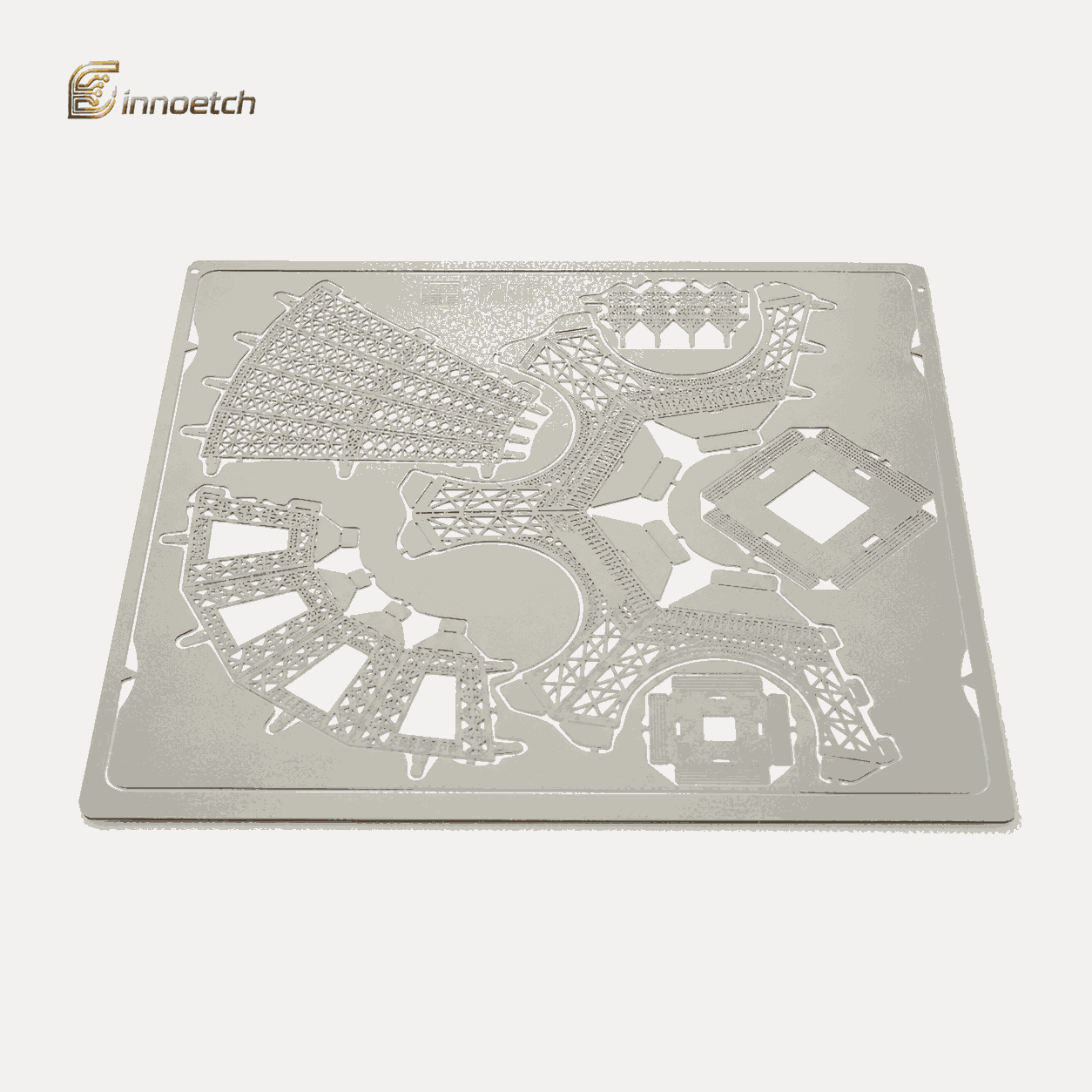
This step determines the shape of the final etched part. Because the pattern is created photographically, photochemical etching can produce complex designs with many fine features at the same time. Dense hole arrays, mesh structures, logos, serial markings, half-etched areas, and complex internal openings can all be included in one design.
Compared with hard tooling, photographic artwork is easier and faster to modify. This makes the process highly suitable for new product development and design optimization.
Step 4: Developing the Pattern
After exposure, the stainless steel sheet goes through a developing process. The unexposed or unwanted resist areas are removed, leaving only the protective pattern on the metal surface. At this stage, the sheet clearly shows which areas will be etched away and which areas will remain.
Accurate developing is important for maintaining fine line width and consistent feature geometry. If the development is incomplete or excessive, it can affect final part dimensions. For this reason, professional process control is required when producing high-precision stainless steel components.
Step 5: Chemical Etching
The prepared stainless steel sheet is then passed through an etching line where a controlled chemical solution removes the exposed metal. The etchant attacks only the unprotected areas, gradually creating the final cut-through patterns, openings, slots, or surface features.
Etching parameters such as chemical concentration, temperature, spray pressure, conveyor speed, and etching time must be carefully controlled. These factors directly influence dimensional accuracy, edge profile, and consistency across the sheet.
Because the process removes material from both sides of the sheet, it can produce clean, detailed features while minimizing stress and deformation. For many stainless steel parts, this is a major advantage over mechanical punching or cutting.
Step 6: Stripping, Cleaning, and Inspection
After etching, the remaining photoresist is stripped away, and the parts are thoroughly cleaned. Depending on the application, additional processes such as passivation, polishing, plating, forming, or surface treatment may be applied.
Inspection is an essential part of the production process. Critical dimensions, hole size, slot width, flatness, edge quality, and surface condition must be checked according to the customer’s drawing and specifications. For precision stainless steel parts, consistent quality control ensures that each batch meets functional and assembly requirements.
Key Advantages of Photochemical Etching for Stainless Steel Parts
Photochemical etching provides several advantages that make it especially valuable for high-precision stainless steel components.
First, it produces burr-free edges. Since there is no mechanical cutting force, the metal is not torn, squeezed, or deformed. This helps eliminate burrs and reduces the need for secondary deburring.
Second, it allows complex designs without expensive hard tooling. Fine holes, narrow slots, internal patterns, and detailed geometries can be created using photo tooling rather than stamping dies. This significantly improves design flexibility.
Third, it minimizes material stress. Stainless steel parts remain flat and stable because the process does not apply mechanical pressure or generate significant heat. This is important for shims, encoder discs, filters, sensor parts, and electronic components.
Fourth, it supports fast prototyping and design changes. If a design needs to be modified, the artwork can often be updated more easily than a mechanical die. This reduces development cost and shortens the engineering validation cycle.
Finally, photochemical etching is suitable for both prototypes and batch production. It allows engineers to test small quantities first and then scale up after the design is confirmed.
Common Stainless Steel Parts Made by Photochemical Etching
Photochemical etching is widely used for stainless steel components that require thin materials, fine patterns, clean edges, and high consistency. Typical products include:
- Stainless steel filter screens
- Precision metal mesh
- Speaker grilles and acoustic mesh
- Stainless steel shims and spacers
- Encoder discs and code wheels
- Sensor components
- Medical device components
- EMI shielding parts
- Battery and electronic contact parts
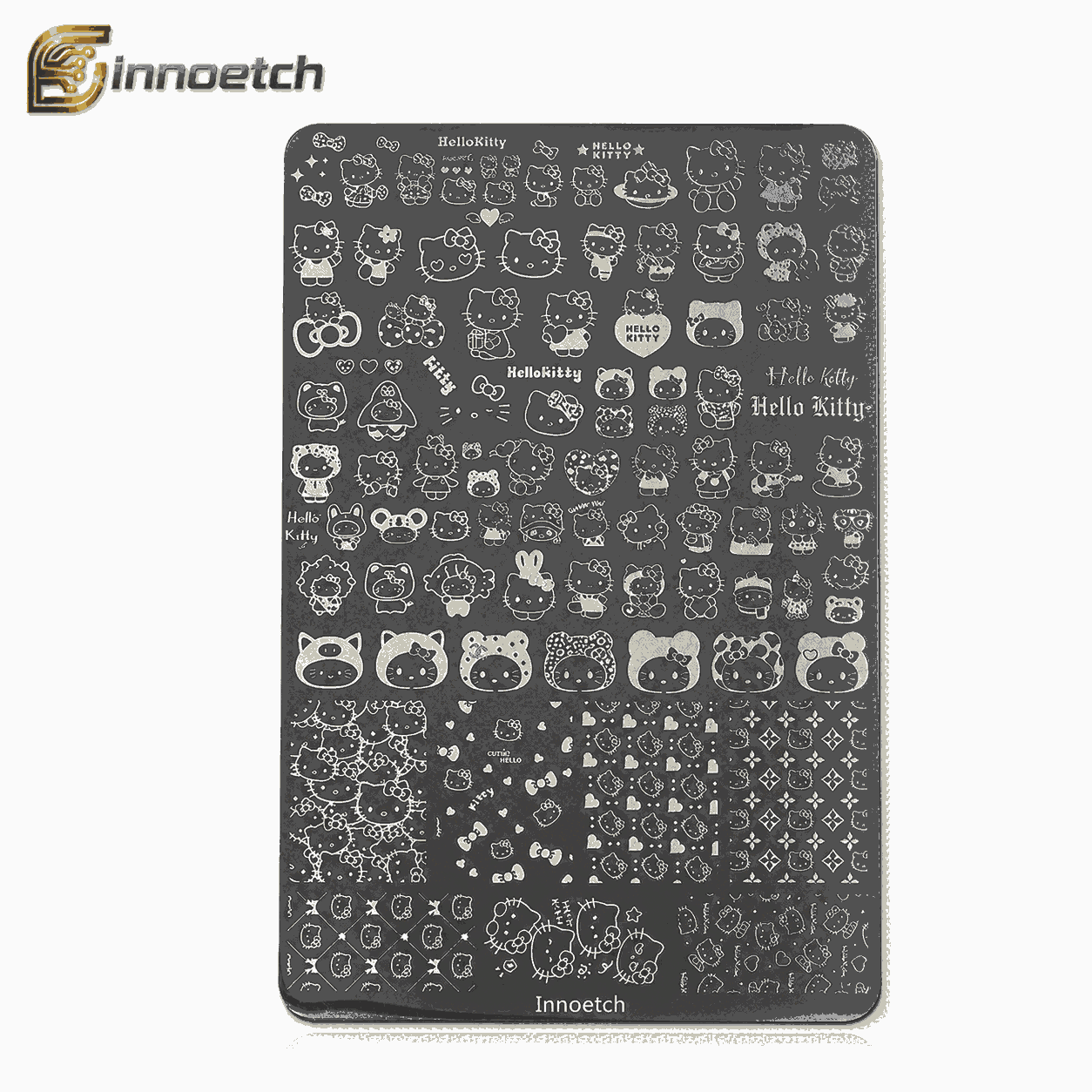
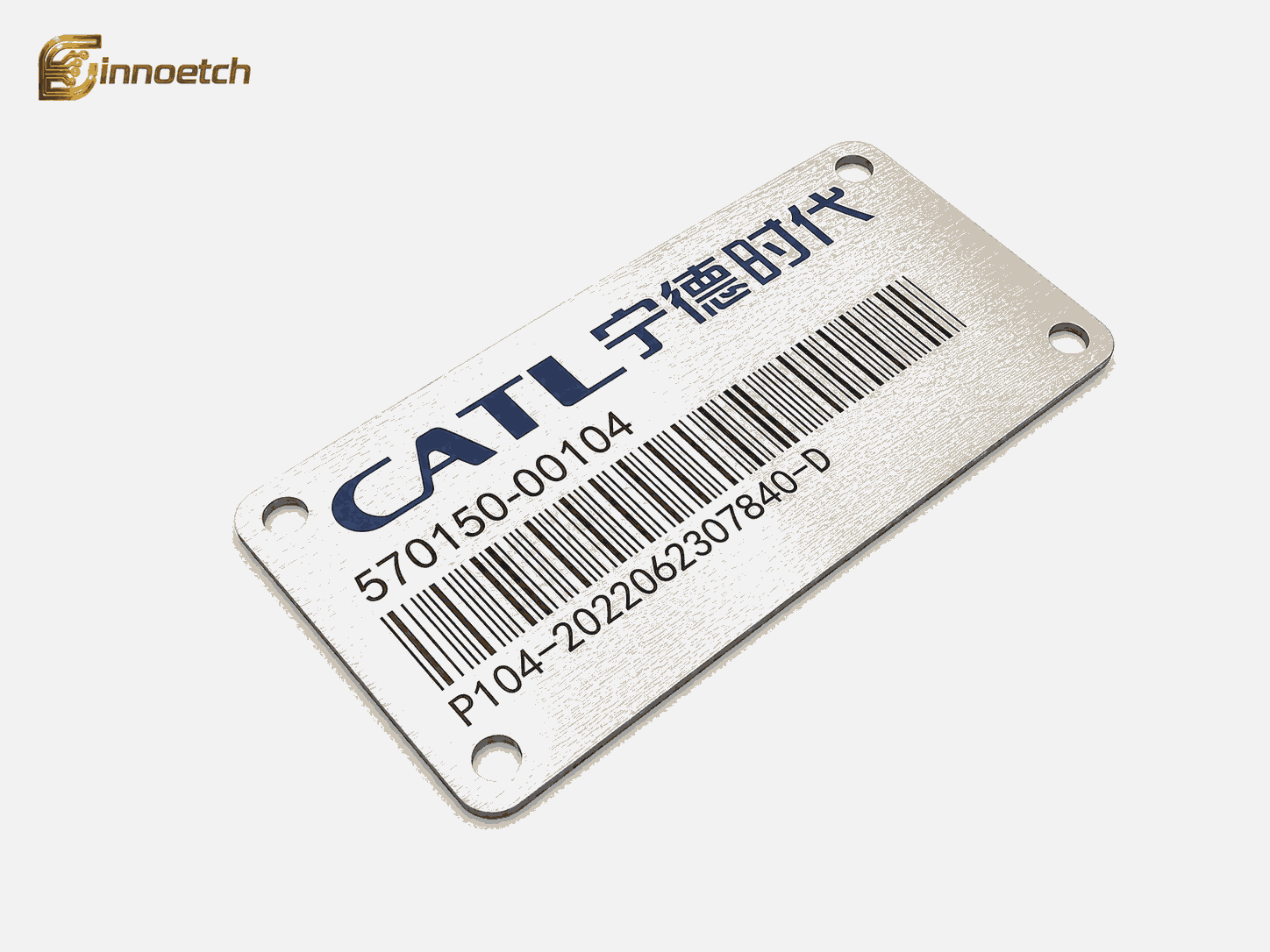
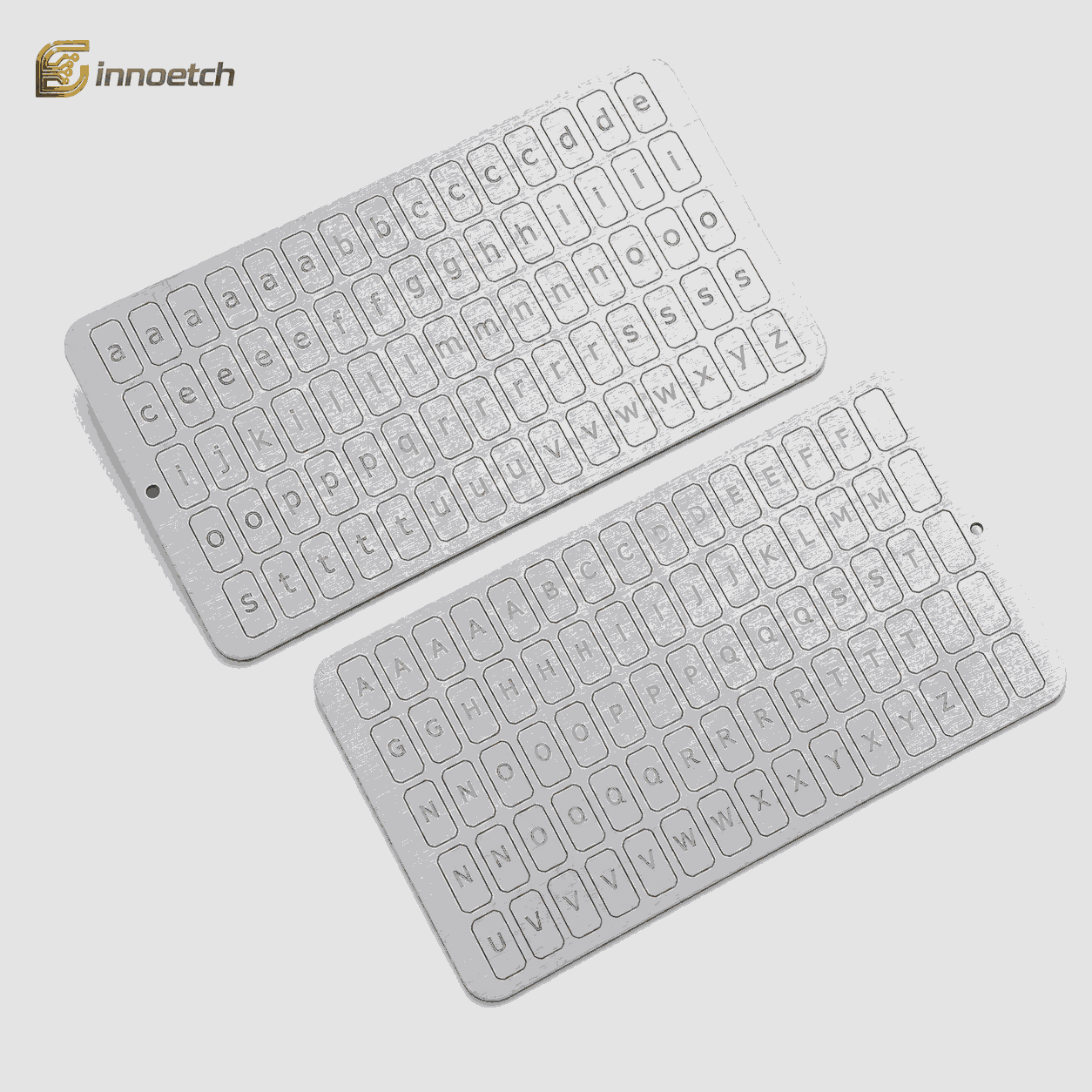
- Decorative stainless steel nameplates
- Coffee machine filters and tea strainer mesh
- Hair dryer dust filter mesh
- Fuel cell and thermal management components
These parts often have detailed internal structures that would be difficult, costly, or inefficient to produce with stamping, laser cutting, or CNC machining.
Photochemical Etching vs. Laser Cutting for Stainless Steel
Laser cutting is useful for many stainless steel parts, especially thicker materials or larger profiles. However, for very thin, complex, and high-density patterns, photochemical etching often has advantages.
Laser cutting can create heat-affected zones, micro burrs, discoloration, or edge hardening depending on material and parameters. It may also be less efficient when a part contains thousands of small holes or extremely fine openings.
Photochemical etching, by contrast, can process many features simultaneously across the sheet. It does not create a heat-affected zone and is better suited for fine mesh structures, precision filters, thin shims, and delicate electronic components.
Photochemical Etching vs. Stamping for Stainless Steel
Stamping is highly efficient for very high-volume production, especially when parts are simple and the design is stable. However, stamping requires hard tooling and can generate burrs, deformation, and residual stress.
For stainless steel parts with fine patterns, narrow slots, small holes, or frequent design changes, stamping dies can become expensive and difficult to maintain. Photochemical etching avoids many of these limitations by using photo tooling instead of mechanical dies.
For early-stage product development, small-to-medium batches, or complex flat stainless steel parts, photochemical etching is often a more flexible and cost-effective choice.
Design Considerations for Stainless Steel Etched Parts
To achieve the best results, engineers should consider several design factors before choosing photochemical etching.
Material thickness should match the required feature size and mechanical function. Very small holes or narrow slots may require thinner material to maintain stable etching quality. The spacing between features should also be designed with manufacturability in mind.
Tolerances should be defined according to the part’s actual function. Overly tight tolerances may increase cost without improving product performance. It is better to identify critical dimensions and separate them from non-critical features.
Half-etched features, fold lines, identification marks, logos, and surface textures can also be included in the design. This is one of the unique advantages of photochemical etching compared with many mechanical processes.
For best results, engineers should provide a detailed drawing, material grade, thickness, surface requirement, tolerance, quantity, and any post-processing needs.
Why Choose Photochemical Etching for Custom Stainless Steel Parts?
Photochemical etching is not the right process for every stainless steel part, but it is highly effective when precision, detail, flatness, and edge quality are important. It helps manufacturers produce parts that are difficult to make with traditional tools while reducing early-stage tooling investment.
For industries such as electronics, medical devices, filtration, automotive systems, fuel cells, sensors, and semiconductor equipment, stainless steel etched parts can support reliable performance in compact and demanding applications.
The process is especially valuable when a part has one or more of the following requirements:
- Thin stainless steel material
- Fine holes or dense mesh patterns
- Burr-free edges
- Low material stress
- High flatness
- Complex internal geometry
- Fast prototyping
- Flexible design modification
- Small-to-medium batch production
- Clean and consistent edge quality
Conclusion
Photochemical etching produces high-precision stainless steel parts by combining accurate image transfer with controlled chemical material removal. The process allows manufacturers to create thin, complex, burr-free components without mechanical stress or expensive hard tooling.
Compared with stamping, laser cutting, or CNC machining, photochemical etching offers strong advantages for flat stainless steel parts with fine details, dense patterns, and strict edge quality requirements. It is particularly suitable for prototypes, custom designs, and precision components used in advanced industrial applications.
If your project requires custom stainless steel parts with fine patterns, clean edges, tight dimensional control, or fast design iteration, photochemical etching may be the ideal manufacturing process. Providing a drawing, material grade, thickness, tolerance, surface requirement, and target quantity will help determine the most efficient production solution for your application.



Related Articles
How Should Engineers Prepare CAD Drawings for Precision Metal Etching?
Accurate CAD drawings are essential for successful precision metal etching. A well-prepared drawing helps manufacturers ...
Jun 11, 2026What Are the Design Guidelines for Custom Photo Etched Metal Parts?
Designing custom photo etched metal parts requires more than drawing the final shape. Material thickness, hole size, bri...
Jun 11, 2026Metal Etching vs Stamping: Which Is Better for Precision Parts?
Metal etching and stamping are two common manufacturing processes for producing metal components, but they are designed ...
Jun 10, 2026What Is a Vapor Chamber?
A vapor chamber is a high-efficiency thermal management component used to spread heat across a flat surface. It is commo...
Jun 10, 2026What Is a Fuel Cell Bipolar Plate?
A fuel cell bipolar plate is one of the most important components in a hydrogen fuel cell stack. It distributes hydrogen...
Jun 10, 2026