
Defines precision metal mesh and explains its etched apertures, materials, and uses in filtration, airflow, acoustic, and shielding parts.
Precision metal mesh is a custom metal sheet or foil with accurately designed micro holes, slots, or mesh patterns. It is commonly made from stainless steel, aluminum, copper, nickel, or other metal alloys. When produced by chemical etching, precision metal mesh can achieve clean edges, fine details, high repeatability, and flexible custom designs.
It is widely used in speaker grilles, dust filters, fan inlet mesh, coffee machine filters, shower outlet mesh, electric shaver foil mesh, server chassis filters, and other precision metal parts.
Precision metal mesh can be made through several processes, including stamping, laser cutting, weaving, punching, and chemical etching. For thin, detailed, and high-accuracy mesh products, chemical etching is often preferred.
In chemical etching, a digital mesh pattern is transferred onto a metal sheet using a photoresist mask. The exposed metal areas are then removed by a controlled chemical solution. After etching, the remaining photoresist is stripped away, and the mesh is cleaned and inspected.
A typical etched precision metal mesh process includes:
Because this process does not use mechanical punching force or thermal cutting, it can create delicate mesh patterns while maintaining flatness and dimensional stability.
Precision metal mesh can be made from many metals and alloys, depending on the product’s performance requirements.
Stainless steel is one of the most common choices because it offers corrosion resistance, strength, cleanliness, and long service life. It is widely used for filter mesh, appliance mesh, speaker grilles, ventilation panels, and industrial mesh parts.
Aluminum is often selected when lightweight structure and corrosion resistance are important. Copper and nickel alloys may be used for electrical, electronic, shielding, or battery-related applications. Other specialty alloys can also be selected when a part requires specific strength, conductivity, heat resistance, or chemical resistance.
Chemical etching is ideal for precision metal mesh because it can produce fine, repeatable openings without creating burrs or deformation. This is especially important when the mesh affects airflow, filtration accuracy, acoustic performance, liquid flow, or product appearance.
Compared with stamping, chemical etching does not require expensive hard tooling and is more flexible for design changes. Compared with laser cutting, it avoids heat-affected zones, edge discoloration, and thermal distortion.
For custom mesh patterns with small holes, narrow slots, or dense openings, chemical etching provides strong design freedom and stable production quality.
The main benefits of precision metal mesh are accuracy, durability, clean edges, design flexibility, and consistent performance.
Because the hole size, open area, pattern shape, and sheet outline can be customized, precision metal mesh can be designed around the exact needs of the final product. For example, a dust filter may need high airflow and particle blocking, while a speaker grille may need acoustic transparency and strong visual appearance.
Precision metal mesh also supports repeatable production. Once the pattern, material, thickness, and tolerance requirements are confirmed, the same design can be produced consistently from prototype samples to mass production.
Precision metal mesh is used in many industries where fine openings and stable metal structures are required.
Common applications include:
Precision filter mesh
Speaker grilles
Smart speaker mesh
Automotive speaker grilles
Fan inlet mesh
Server chassis dust filter mesh
Hair dryer dust filter mesh
Electric shaver foil mesh
Coffee machine filter mesh
Tea infuser mesh
Shower head outlet mesh
Ventilation and airflow panels
Electronic shielding parts
Decorative metal mesh components
These applications often require clean edges, reliable performance, stable dimensions, and customized mesh patterns.
Ordinary wire mesh is typically woven from metal wires. It is useful for many general filtration and screening applications, but the opening shape, edge structure, and overall geometry may be limited by the weaving process.
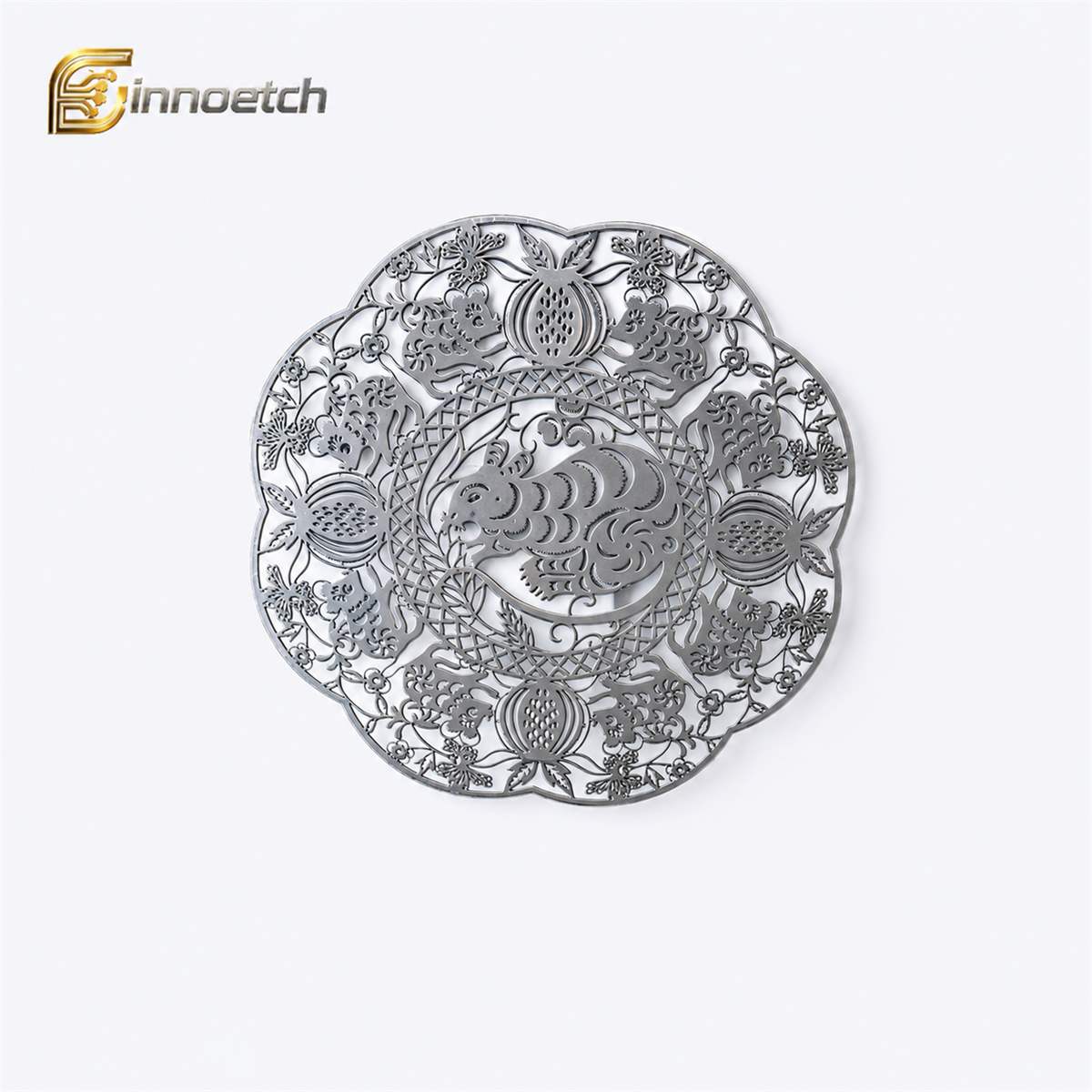
Precision metal mesh is usually made from a flat metal sheet or foil. The openings can be etched, punched, or laser cut into customized patterns. This allows more control over hole shape, open area, outline, thickness, and functional design.
For products that require fine details, smooth edges, brand-specific shapes, or strict dimensional control, precision etched metal mesh is often the better solution.
When selecting precision metal mesh, engineers and buyers should consider several factors:
Material type
Material thickness
Hole size and shape
Open area ratio
Mesh pattern
Dimensional tolerance
Surface finish
Strength and flexibility
Corrosion resistance
Airflow or filtration requirement
Production volume
A professional precision metal etching manufacturer can help optimize the design based on function, manufacturability, cost, and batch stability.
Q1: What is precision metal mesh used for?
Precision metal mesh is used for filtration, airflow control, dust prevention, speaker protection, acoustic performance, liquid distribution, shielding, ventilation, and decorative metal components.
Q2: Is precision metal mesh the same as woven wire mesh?
No. Woven wire mesh is made by weaving metal wires. Precision metal mesh is often made from sheet metal or metal foil with accurately formed holes, slots, or patterns.
Q3: What materials are best for precision metal mesh?
Stainless steel is commonly used because it is strong, corrosion-resistant, and durable. Aluminum, copper, nickel, and specialty alloys can also be used depending on the application.
Q4: Can precision metal mesh be customized?
Yes. Precision metal mesh can be customized by material, thickness, hole size, slot shape, open area, pattern design, outline, and surface finish.
Q5: Why is chemical etching suitable for precision metal mesh?
Chemical etching is suitable because it creates fine openings, clean edges, and complex patterns without burrs, mechanical stress, or heat damage.
Q6: Which industries use precision metal mesh?
Precision metal mesh is used in electronics, automotive, audio products, home appliances, filtration, medical devices, telecommunications, and industrial equipment.
Precision metal mesh is a high-accuracy metal component designed with controlled openings, patterns, and shapes. It is used when a product requires reliable filtration, airflow, acoustic protection, dust control, shielding, or decorative performance.
For custom stainless steel mesh, micro perforated mesh, speaker grilles, dust filters, appliance mesh, and other precision etched metal parts, chemical etching provides a flexible and reliable manufacturing solution from prototype development to mass production.
What Is Precision Metal Mesh? is widely used in precision metal etching applications where clean edges, tight tolerances, complex patterns and stable performance are required. Typical industries include electronics, semiconductors, sensors, fuel cells, acoustic components, EMI shielding, thermal management and precision mechanical parts.
What Is Precision Metal Mesh? is a precision metal component manufactured by photochemical etching for applications requiring accurate dimensions, smooth edges and reliable performance.
Common materials include stainless steel, copper, brass, nickel silver, titanium, aluminum and other thin metal sheets depending on the application requirements.
INNOETCH can process thin metal materials from approximately 0.02 mm to 1.5 mm, depending on material type, part structure and tolerance requirements.
For many precision etched parts, tolerances can reach ±0.01 mm to ±0.05 mm, depending on material thickness, design complexity and production volume.
Chemical etching does not require expensive hard tooling and can produce fine patterns, complex shapes and burr-free edges without mechanical deformation.
Yes. INNOETCH supports custom drawings, materials, thicknesses, hole patterns, surface finishes, dimensions and prototype-to-mass-production requirements.
2D drawings, DXF files, DWG files, STEP files, material requirements, thickness, tolerance, quantity and application details are recommended for accurate quotation.
You can send your drawings and technical requirements to INNOETCH. Our engineering team will review the design and provide a quotation.