
A practical guide to metal etching, explaining how the process creates thin, complex, burr-free precision metal parts.
Metal etching is a precision metal manufacturing process that removes selected areas of metal through a controlled chemical reaction. Instead of cutting, punching, or mechanically machining the material, metal etching uses a photoresist pattern and an etching solution to create accurate shapes, holes, slots, meshes, channels, and micro-features on thin metal sheets.
This process is also commonly called photochemical etching, chemical etching, or photo etching. It is especially useful when a part requires fine detail, clean edges, flexible design changes, and low-stress processing. For industries that need thin metal components with complex geometries, metal etching offers a practical alternative to stamping, laser cutting, wire EDM, and CNC machining.
At Innoetch, metal etching is used to manufacture a wide range of precision metal parts, including speaker meshes, encoder discs, IC lead frames, precision shims, vapor chamber components, filtration meshes, bipolar plates, nameplates, decorative metal parts, and custom engineered components based on customer drawings.
The metal etching process starts with a flat metal sheet or coil. The material is cleaned, coated with photoresist, exposed to UV light through a designed film, developed, etched, stripped, inspected, and finished according to the required application.
Although each project may require different process settings, the general workflow includes the following steps.
The first step is choosing the right metal material based on the part’s function, thickness, mechanical strength, corrosion resistance, conductivity, and surface requirements. Commonly etched metals include stainless steel, copper, brass, nickel, aluminum, titanium, molybdenum, and various alloy materials.
Material selection directly affects dimensional stability, etching speed, edge quality, flatness, and final product performance.
Before applying photoresist, the metal surface must be cleaned to remove oil, dust, oxides, and other contaminants. A clean surface helps the photoresist bond properly to the metal, which is essential for accurate pattern transfer and consistent etching quality.
A light-sensitive photoresist is applied to the metal surface. This layer protects selected areas of the metal during the etching process. Depending on the design, the photoresist may be applied to one side or both sides of the metal sheet.
Double-sided coating is commonly used for parts that require through-holes, fine openings, balanced etching, or reduced undercut.
A phototool or digital pattern is used to expose the coated metal sheet to ultraviolet light. The UV exposure transfers the part design onto the photoresist layer. Areas that need to remain protected stay covered, while areas that need to be removed are opened during the development stage.
This step allows metal etching to create very detailed patterns without expensive hard tooling.
After exposure, the metal sheet goes through a developing process that removes the unneeded photoresist and reveals the areas of metal that will be etched away. The remaining photoresist acts as a protective mask.
The prepared metal sheet is sprayed or immersed with a controlled etching solution. The chemical solution removes the exposed metal areas while the protected areas remain intact. Process parameters such as solution concentration, temperature, spray pressure, line speed, and etching time must be carefully controlled.
This is where the final geometry of the part is formed. Proper process control helps achieve consistent dimensions, clean openings, and stable edge quality.
After etching is complete, the remaining photoresist is removed from the metal surface. The finished parts are then cleaned to remove chemical residues.
Finished parts are inspected for dimensions, surface quality, hole shape, edge condition, flatness, and visual appearance. Depending on customer requirements, additional finishing processes may include polishing, plating, passivation, blackening, brushing, adhesive lamination, forming, or packaging.
Metal etching is compatible with many thin metal materials. The most common options include:
Stainless steel is widely used for speaker meshes, filters, shims, medical components, spring parts, decorative parts, encoder discs, and structural components. It provides good corrosion resistance, strength, and dimensional stability.
Copper and copper alloys are often selected for electronic components, EMI shielding parts, terminals, lead frames, heat dissipation parts, and conductive structures. Copper offers excellent electrical and thermal conductivity.
Nickel is commonly used for battery components, electronic parts, precision meshes, shielding parts, and corrosion-resistant components. Nickel alloys are suitable for applications that require stability, conductivity, or resistance to harsh environments.
Titanium offers high strength, low density, and excellent corrosion resistance. It is used in medical devices, aerospace applications, energy systems, and high-performance industrial components.
Aluminum is lightweight and easy to process, making it suitable for decorative panels, nameplates, shielding parts, and lightweight structural components.
The correct material should be chosen according to the part’s working environment, mechanical load, electrical requirements, surface treatment needs, and cost target.
Metal etching offers several advantages for precision metal parts manufacturing, especially when the design includes fine holes, narrow slots, complex outlines, or thin materials.
Unlike stamping or mechanical cutting, metal etching does not apply strong mechanical force to the material. This helps reduce burrs, deformation, and residual stress. For thin metal parts, this is a major advantage because flatness and edge quality are often critical.
Metal etching does not require expensive hard dies for every design change. If a product needs a new pattern, hole size, slot layout, or outer shape, the design can usually be updated through a new phototool or digital artwork. This makes the process suitable for prototypes, small batches, and customized production.
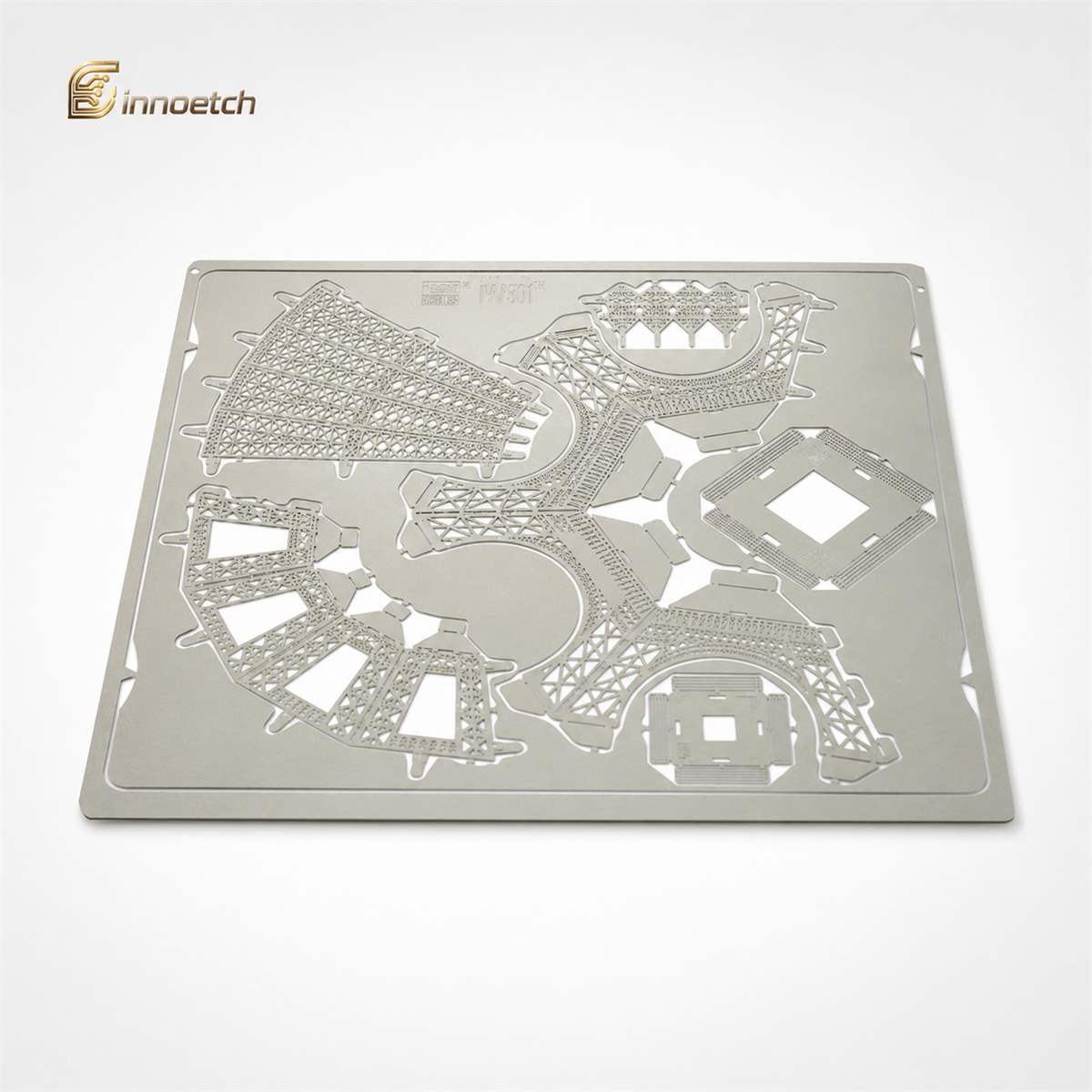
Metal etching can produce complex shapes that may be difficult or costly to manufacture by conventional machining. Fine meshes, micro holes, channels, logos, text, encoder patterns, and intricate openings can be made on thin metal sheets with high repeatability.
For early-stage product development, metal etching can reduce tooling cost and shorten development cycles. Customers can test multiple design versions before moving to mass production. This is especially useful for electronics, medical devices, automotive components, and functional metal parts.
With controlled process parameters and proper inspection, metal etching can deliver consistent dimensions across repeated production runs. This makes it suitable for parts that require stable performance, such as filters, screens, lead frames, shims, and precision spring elements.
Metal etching is used across many industries because it can produce accurate, thin, and detailed metal components.
Metal etching is widely used for IC lead frames, shielding covers, precision contacts, terminals, connector parts, encoder discs, and micro electronic components. These parts often require fine patterns, reliable conductivity, and stable dimensional accuracy.
Etched metal mesh is used in filtration, acoustic control, airflow control, dust protection, and decorative applications. Examples include speaker grilles, microphone meshes, tea strainer meshes, coffee machine filter discs, shower mesh discs, hair dryer dust filters, and server ventilation meshes.
Medical components often require clean edges, small features, and biocompatible materials such as stainless steel or titanium. Metal etching can be used for surgical tools, implant-related structures, diagnostic components, and micro precision parts.
In automotive and energy applications, metal etching can be used for battery parts, fuel cell plates, bipolar plates, heat exchanger plates, sensor components, decorative trims, and precision functional parts.
Metal etching can create fine channels, wick structures, support patterns, and heat transfer features for vapor chambers, heat spreaders, and thermal management components used in electronics and power devices.
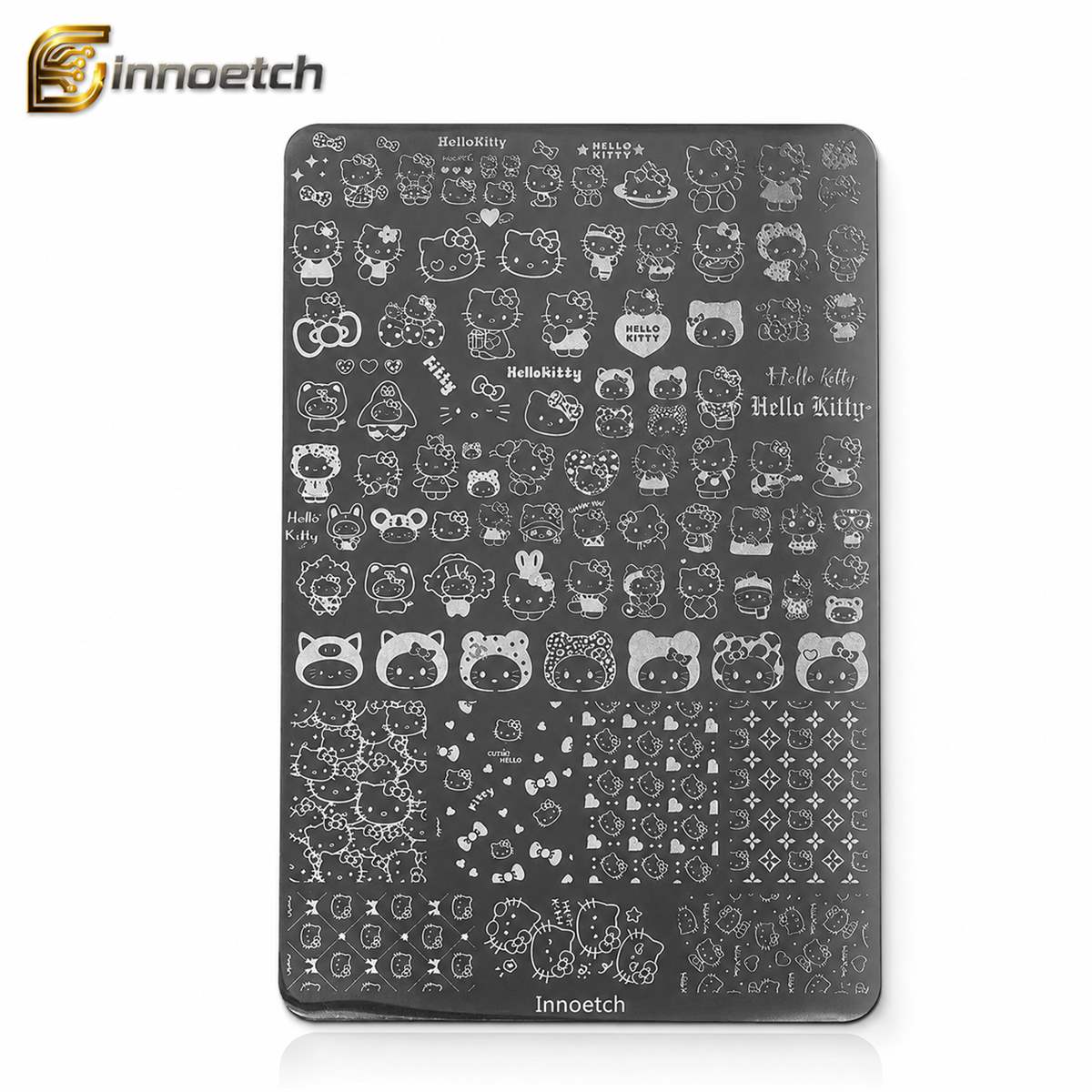
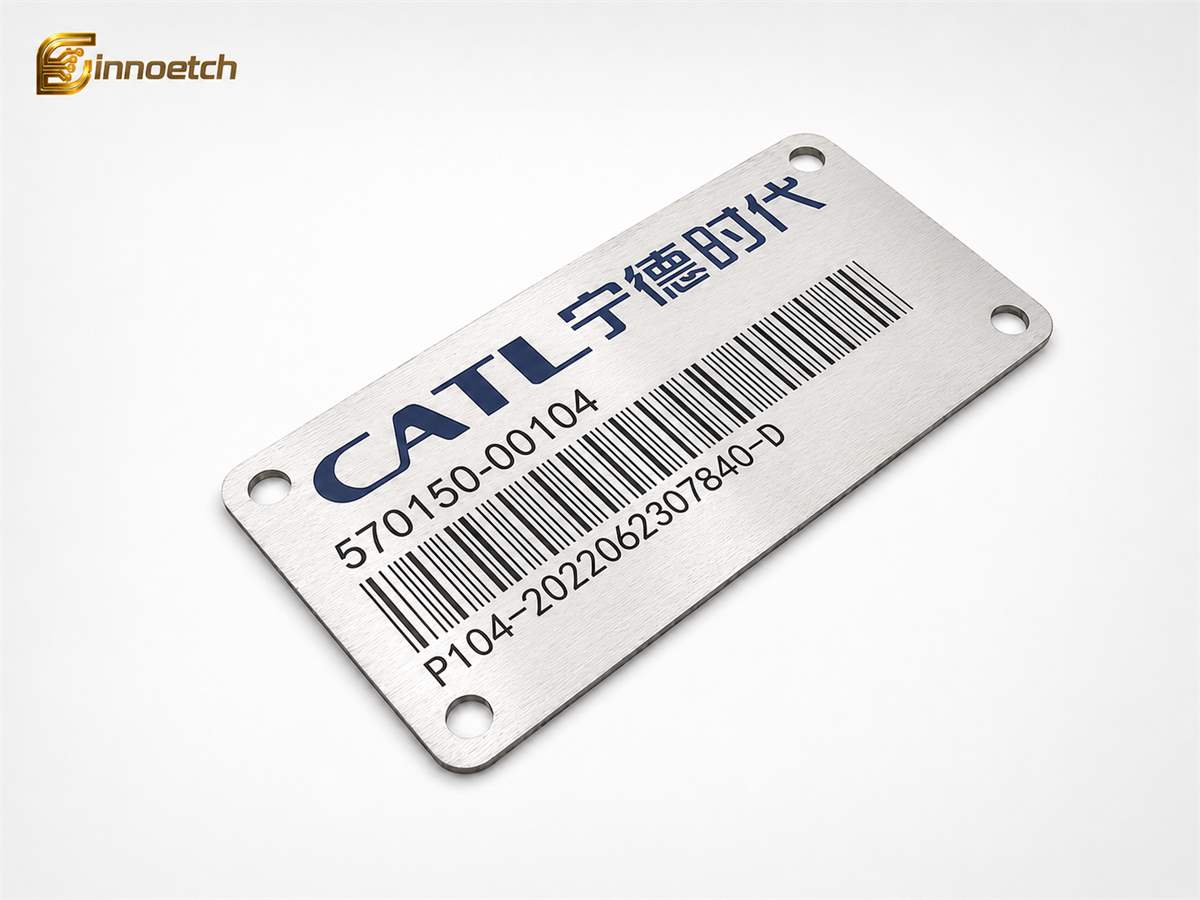
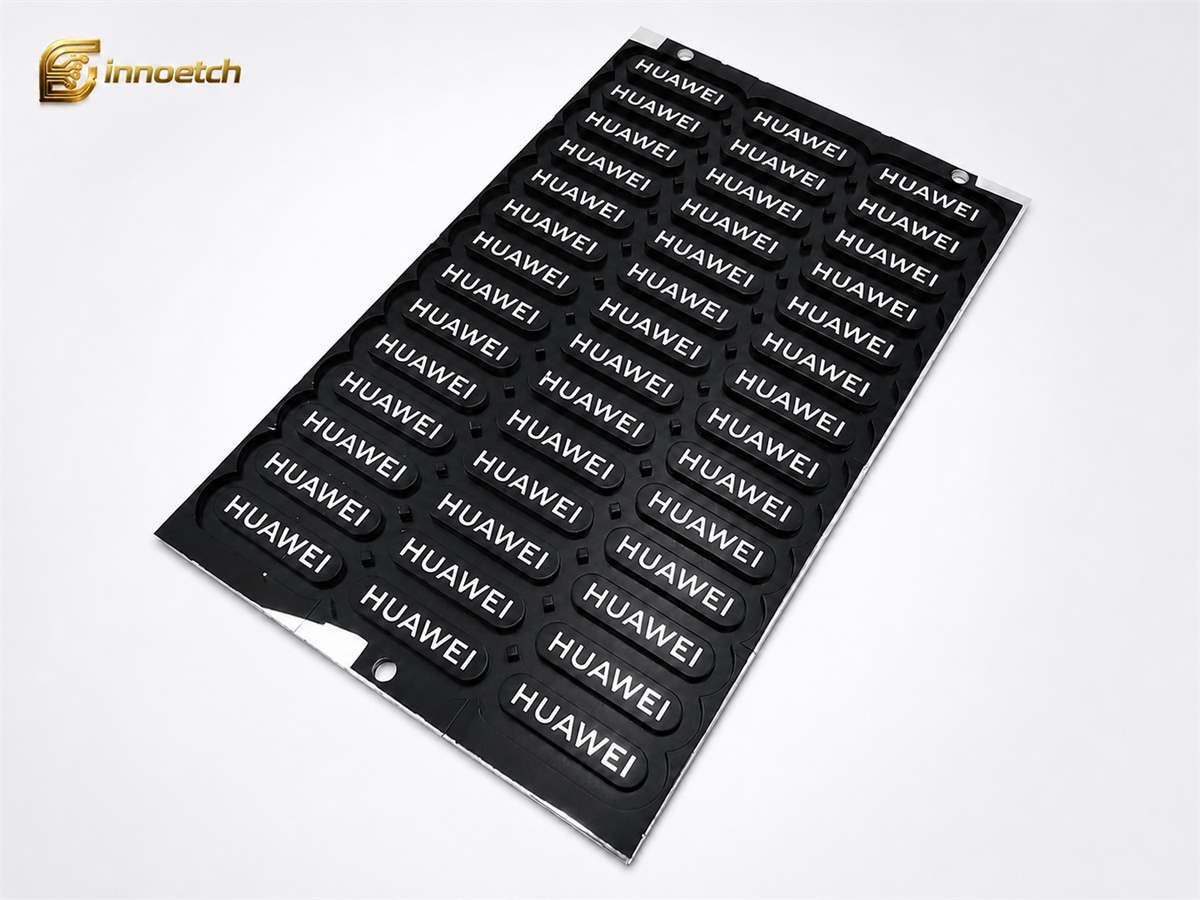
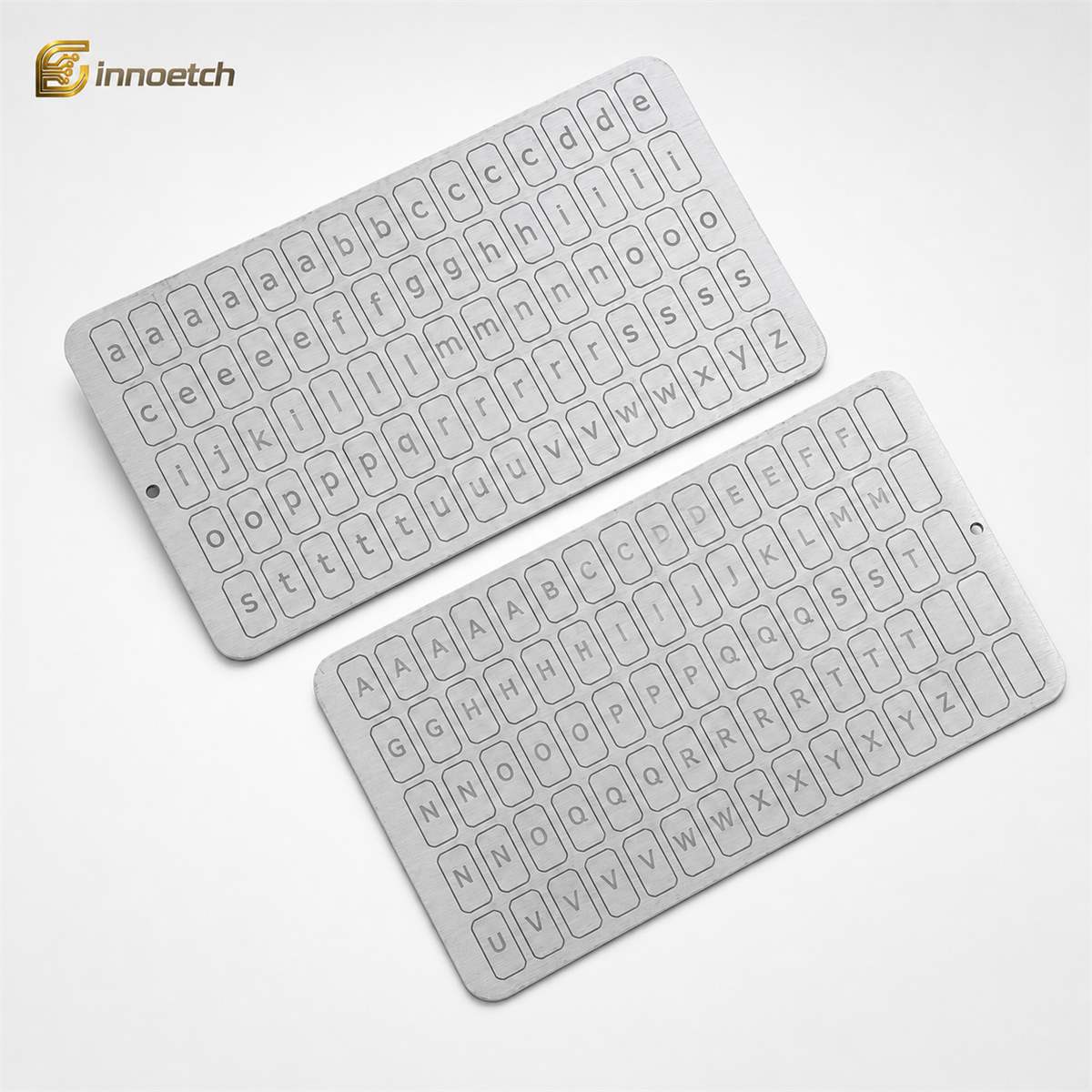
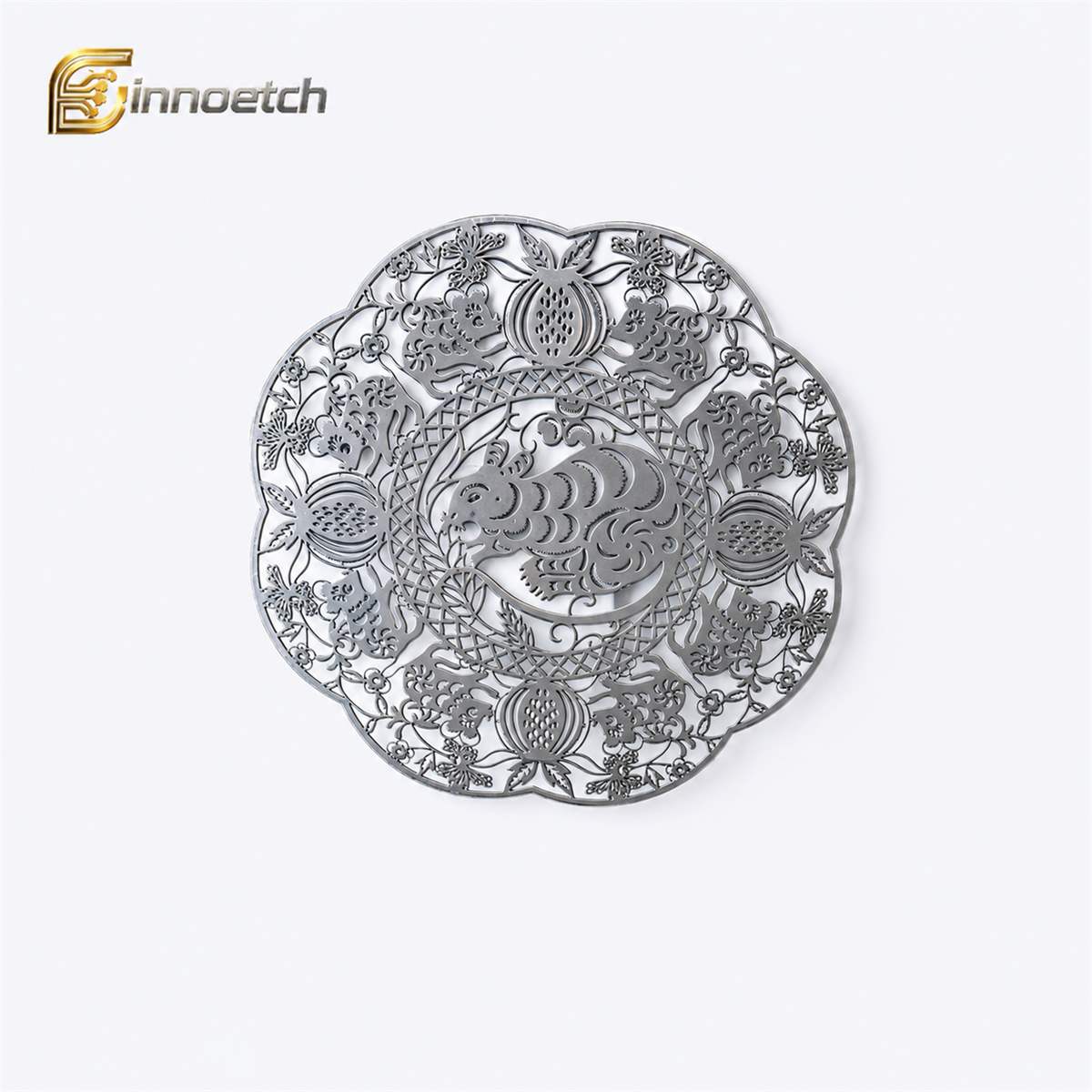
Metal etching is also suitable for high-quality decorative products such as metal bookmarks, stainless steel ornaments, nameplates, logos, labels, and custom craft parts. It allows fine text, patterns, and surface effects to be produced with excellent visual detail.
Different manufacturing methods have different strengths. Choosing the right process depends on material thickness, part complexity, tolerance requirements, production volume, and budget.
Stamping is efficient for high-volume production after tooling is completed. However, stamping dies can be expensive and less flexible when design changes are frequent. Metal etching is more flexible for prototypes, small batches, and complex thin metal parts because it does not require hard tooling.
Laser cutting is useful for many sheet metal applications, but it may create heat-affected zones, discoloration, or edge changes depending on the material and thickness. Metal etching is a non-contact chemical process, making it suitable for fine features, thin materials, and parts where thermal influence should be avoided.
CNC machining is excellent for thick, three-dimensional, and high-strength mechanical parts. However, it may not be the most efficient choice for thin sheets with thousands of small holes or complex micro patterns. Metal etching is often better suited for flat, thin, detailed metal components.
To achieve better manufacturing results, engineers should consider the following design factors before sending drawings for quotation.
Material thickness affects minimum hole size, line width, tolerance, and etching time. Thinner materials are generally easier to etch with fine details, while thicker materials may require wider openings and larger feature spacing.
Very small holes and narrow slots are possible, but the design should match the selected material and thickness. If the opening is too small compared with the material thickness, dimensional accuracy and etching consistency may be affected.
Tolerance depends on material type, thickness, part size, pattern density, and production process control. For best results, customers should clearly mark critical dimensions and functional areas on the drawing.
If the part requires plating, passivation, blackening, polishing, brushing, or adhesive lamination, these requirements should be confirmed at the design stage. Surface finishing may affect final thickness, appearance, conductivity, and corrosion resistance.
Metal etching is suitable for prototypes, pilot runs, and mass production. Providing estimated annual usage or batch quantity helps the manufacturer recommend the most cost-effective production plan.
Choosing the right metal etching supplier is important for product quality, delivery stability, and engineering support. A qualified manufacturer should be able to review drawings, recommend suitable materials, evaluate design feasibility, control process parameters, and provide inspection reports when required.
When selecting a supplier, consider the following factors:
For OEM and engineering projects, early communication with the manufacturer can help reduce design risks, improve manufacturability, and shorten development time.
Metal etching is a precise, flexible, and cost-effective manufacturing process for producing thin metal parts with complex patterns, fine openings, and clean edges. Compared with stamping, laser cutting, and CNC machining, it offers unique advantages for burr-free, low-stress, and highly detailed metal components.
From electronic parts and precision meshes to medical components, vapor chamber structures, shims, lead frames, bipolar plates, and decorative metal products, metal etching supports a wide range of industrial applications.
If you need custom precision metal parts, Innoetch can manufacture etched components based on your drawings, material requirements, thickness, surface finish, and application needs. Share your drawings or samples with our engineering team to evaluate manufacturability and receive a customized solution.
What Is Metal Etching? A Guide to Precision Metal Parts Manufacturing is widely used in precision metal etching applications where clean edges, tight tolerances, complex patterns and stable performance are required. Typical industries include electronics, semiconductors, sensors, fuel cells, acoustic components, EMI shielding, thermal management and precision mechanical parts.
What Is Metal Etching? A Guide to Precision Metal Parts Manufacturing is a precision metal component manufactured by photochemical etching for applications requiring accurate dimensions, smooth edges and reliable performance.
Common materials include stainless steel, copper, brass, nickel silver, titanium, aluminum and other thin metal sheets depending on the application requirements.
INNOETCH can process thin metal materials from approximately 0.02 mm to 1.5 mm, depending on material type, part structure and tolerance requirements.
For many precision etched parts, tolerances can reach ±0.01 mm to ±0.05 mm, depending on material thickness, design complexity and production volume.
Chemical etching does not require expensive hard tooling and can produce fine patterns, complex shapes and burr-free edges without mechanical deformation.
Yes. INNOETCH supports custom drawings, materials, thicknesses, hole patterns, surface finishes, dimensions and prototype-to-mass-production requirements.
2D drawings, DXF files, DWG files, STEP files, material requirements, thickness, tolerance, quantity and application details are recommended for accurate quotation.
You can send your drawings and technical requirements to INNOETCH. Our engineering team will review the design and provide a quotation.