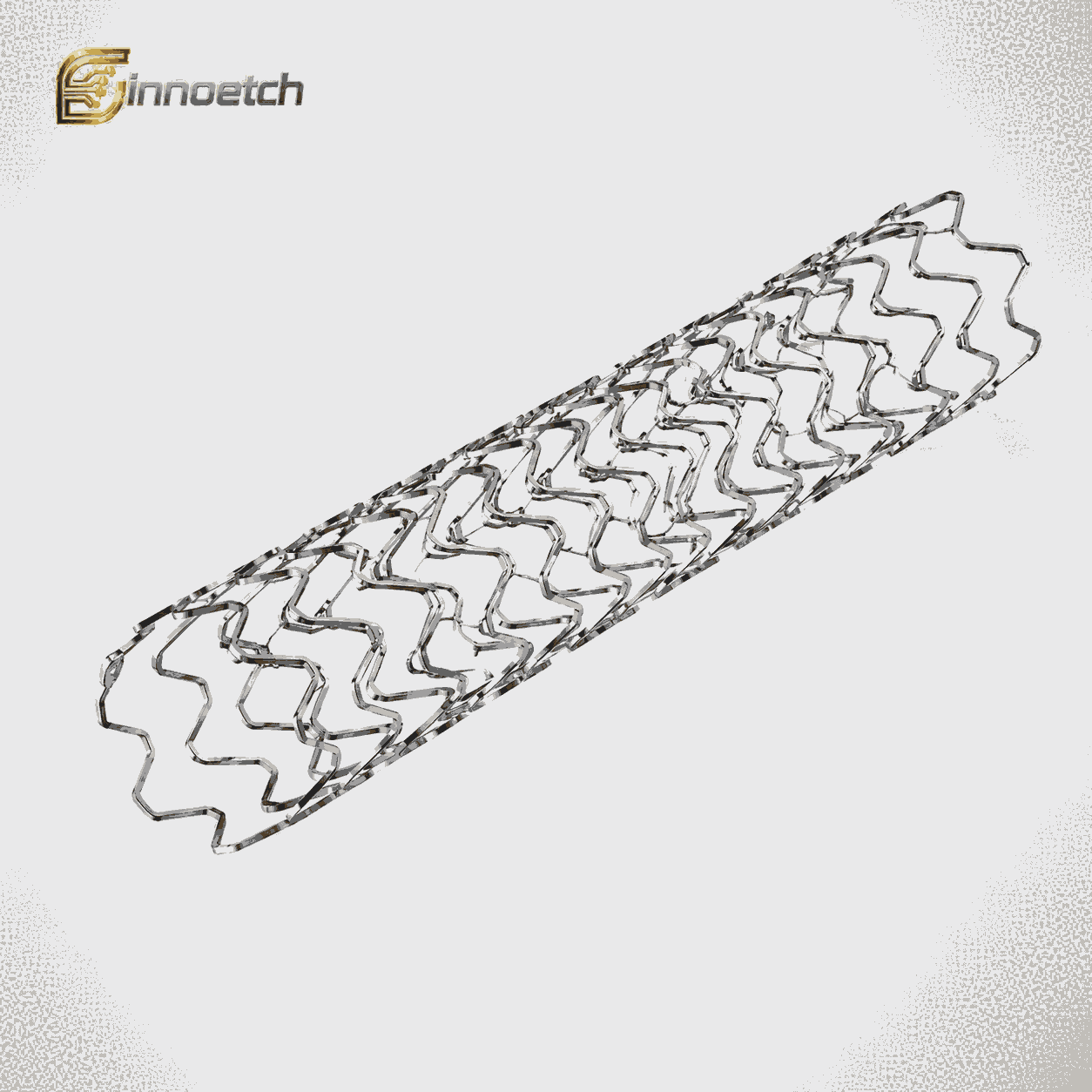
Cardiovascular Stent Structure is a precision metal mesh component used in vascular intervention devices, minimally invasive medical instruments, catheter systems, and precision medical assemblies. It is commonly manufactured from stainless steel, nitinol
Cardiovascular Stent Structure is a precision metal mesh component used in medical devices and minimally invasive intervention systems. Its main function is to provide support, expansion, guidance, or structural connection within vascular, catheter, or other miniature medical structures, helping achieve stable mechanical support and flexible assembly performance.
In vascular intervention and miniature medical device applications, stent structures often require thin-wall design, lightweight construction, high precision, good flexibility, and stable dimensional consistency. Mesh geometry, bridge width, material thickness, opening structure, edge quality, and surface condition can directly affect support performance, bending behavior, and assembly reliability. Rough edges, dimensional deviation, or local deformation may influence downstream assembly, surface finishing, and product performance validation.
This product can be customized using stainless steel, nitinol, cobalt-chromium alloy, titanium alloy, or other medical-grade metal materials according to customer requirements. Stainless steel provides good mechanical strength and processing stability. Nitinol offers excellent elasticity and shape recovery performance, making it suitable for flexible support structures. Cobalt-chromium alloy provides high strength and good corrosion resistance for medical metal components requiring structural strength and dimensional stability.
Through precision metal etching, complex, fine, and clean-edged mesh structures, connecting bridges, opening patterns, and accurate profiles can be produced on thin metal sheets or metal tubes. Compared with traditional mechanical cutting or stamping, chemical etching is well suited for micro-features, complex patterns, thin-wall metal structures, and custom development during the prototyping stage. The process also helps reduce mechanical stress deformation, maintaining better structural consistency.
Innoetch supports the custom development of different types of medical metal stent structures based on customer drawings, including vascular stent components, miniature metal mesh tubes, tubular support parts, catheter reinforcement structures, flexible metal connectors, medical support frames, and custom precision etched medical metal components. Products can also be supplied with flat etching, tube etching, forming, surface cleaning, deburring, electropolishing, passivation, or other post-processing services according to customer requirements.
This type of product can be used in medical device development, vascular intervention devices, catheter systems, miniature support structures, medical sensor assemblies, precision delivery systems, and other high-precision medical metal structure applications. For customers who require fine mesh geometry, flexible support performance, precise dimensions, and custom development capability, precision etched cardiovascular stent structures provide a reliable, flexible, and scalable metal manufacturing solution for design validation and volume production.
Innoetch provides custom cardiovascular stent structure and medical metal stent manufacturing services using precision metal etching technology to produce high-precision, flexible, and stable stainless steel, nitinol, and other medical-grade metal structural components for medical device development and precision assembly.
Cardiovascular Stent Structure is widely used in precision metal etching applications where clean edges, tight tolerances, complex patterns and stable performance are required. Typical industries include electronics, semiconductors, sensors, fuel cells, acoustic components, EMI shielding, thermal management and precision mechanical parts.
Cardiovascular Stent Structure is a precision metal component manufactured by photochemical etching for applications requiring accurate dimensions, smooth edges and reliable performance.
Common materials include stainless steel, copper, brass, nickel silver, titanium, aluminum and other thin metal sheets depending on the application requirements.
INNOETCH can process thin metal materials from approximately 0.02 mm to 1.5 mm, depending on material type, part structure and tolerance requirements.
For many precision etched parts, tolerances can reach ±0.01 mm to ±0.05 mm, depending on material thickness, design complexity and production volume.
Chemical etching does not require expensive hard tooling and can produce fine patterns, complex shapes and burr-free edges without mechanical deformation.
Yes. INNOETCH supports custom drawings, materials, thicknesses, hole patterns, surface finishes, dimensions and prototype-to-mass-production requirements.
2D drawings, DXF files, DWG files, STEP files, material requirements, thickness, tolerance, quantity and application details are recommended for accurate quotation.
You can send your drawings and technical requirements to INNOETCH. Our engineering team will review the design and provide a quotation.